Chapters 6 / 14
  1. 1 This is a Growing Dome
  2. 2 Choosing the Right Size
  3. 3 Build Site Selection
  4. 4 Climate, Utilities & Year-Round Use
  5. 5 Ownership Expectations
  6. 6 Choosing the Right Foundation
  7. 7 Owner-Supplied Items & Accessories
  8. 8 Permitting & Approvals
  9. 9 Delivery & Site Preparation
  10. 10 Assembly & Installation
  11. 11 Budgeting & Project Planning
  12. 12 Maintenance Overview
  13. 13 Next Steps
  14. 14 Continued Learning & Resources

Choosing the Right Foundation

What your foundation has to do, the recommended options, and the systems you can add underneath.

A compact track loader levelling ground for a dome foundation

Your foundation is an important structural decision. It determines how the geodesic dome is anchored, levelled, and protected from drainage and frost over time. While the Growing Dome includes an integrated foundation wall, the external foundation system is responsible for securing the structure and managing ground movement. The ideal approach depends on your site conditions, climate, budget, and desired permanence.

What Your Foundation Needs to Do

A properly designed foundation should:

  • Anchor the dome securely to the ground
  • Minimize movement from frost cycles and shifting soil
  • Provide a level, stable base for installation
  • Help manage drainage and support long-term performance

A geodesic dome foundation must securely anchor the structure, provide a level base, and support long-term stability in your local conditions. It should also help manage drainage and reduce movement from seasonal frost or ground shifts.

Planning Considerations

Plan your foundation early, as it affects both construction and long-term performance:

  • Complete the foundation before delivery to allow for immediate assembly
  • Assess site conditions, including soil, drainage, and frost depth
  • Verify local building codes or permit requirements
  • Plan utility routing (water, power, airflow) before construction
  • Ensure the foundation is level and accurately aligned

Some foundation types may require excavation, forming, or contractor involvement depending on site conditions and complexity. Some foundation types may be required to meet local building codes or permit conditions.

Foundation Recommendations

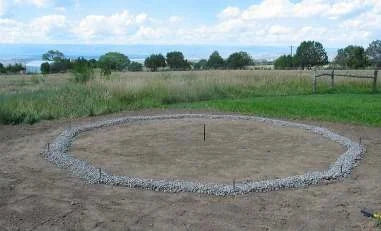
Gravel Ring

Gravel Ring

A compacted gravel ring forms the base of the dome, allowing for drainage while providing a level surface.

Best suited for:

  • Smaller domes (15ft–26ft)
  • Well-drained sites
  • Projects with tighter budgets

This is the most economical option. In colder regions, additional insulation around the perimeter can help manage frost. Check with your municipality first, as gravel ring foundations aren't permitted in certain regions.
Concrete Piers

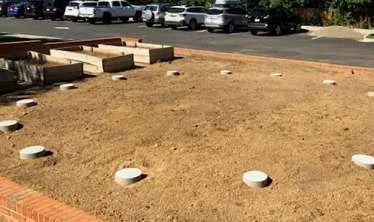
Concrete Piers

Concrete piers are installed at each load bearing point of the dome, creating a strong and stable anchoring system.

Best suited for:

  • Most Canadian climates
  • Sites with softer or wetter soil
  • Larger domes requiring stronger anchoring

This is a common and reliable option that balances cost and performance, particularly in areas with deeper frost penetration.
Insulated Concrete Form (ICF)

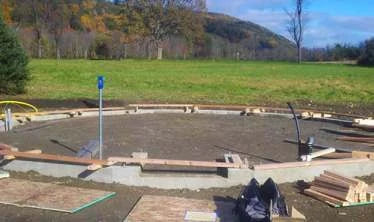
Insulated Concrete Form (ICF)

A continuous insulated concrete foundation provides maximum strength and thermal performance.

Best suited for:

  • 33ft and 42ft domes
  • Cold climates with frost-heave risk
  • Permanent or permitted installations
  • Year-round growing

This is the most robust option, offering excellent stability and insulation, but typically requires professional installation.
Optional Systems

While not required, these systems can help improve comfort, efficiency, and year-round growing.

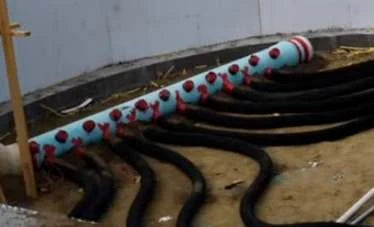
GAHT / Geothermal

GAHT / Geothermal

Some installations incorporate ground-to-air heat transfer (GAHT) or similar geothermal systems beneath the foundation.

These systems circulate air through the ground to improve temperature stability and enhance passive performance.
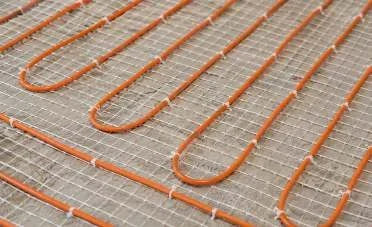
In-Floor Heating Systems

In-Floor Heating Systems

In-floor heating is becoming an increasingly common option, particularly for clients using an ICF foundation.

This can provide additional warmth, improve comfort during colder months, and support more consistent growing conditions in year-round installations.
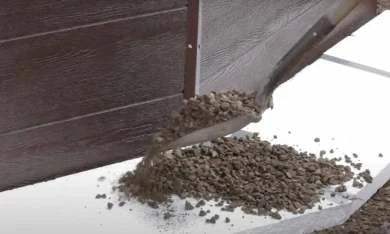
Ground Insulation

Ground Insulation

Ground insulation may also be added beneath the dome floor to reduce heat loss and improve overall thermal performance.

This can be considered for gravel ring and concrete pier foundations, especially in colder regions or installations where winter growing is a priority.